


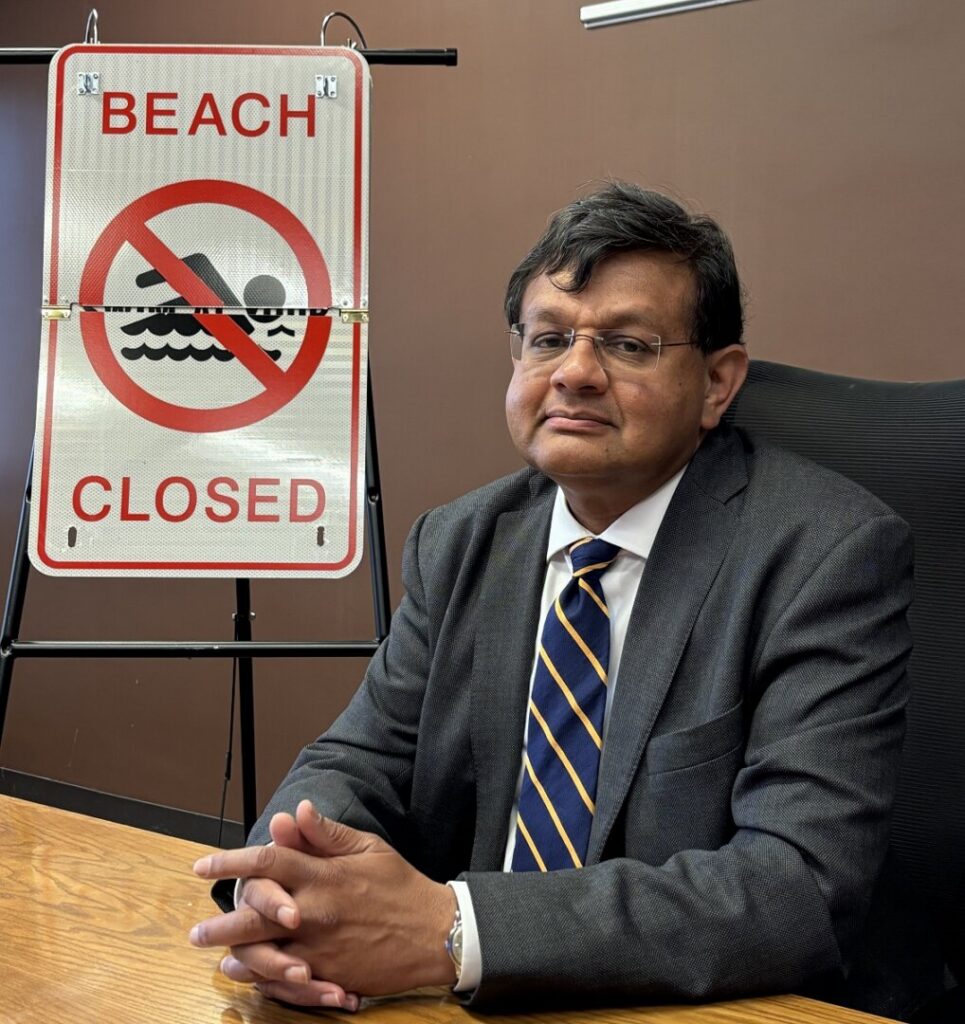
Chatham-Kent health officials are encouraging beachgoers to use their best judgment to ensure conditions are safe for swimming.
While Chatham-Kent Public Health tests for E. coli bacteria at public beaches during the summer months, it only reflects the water conditions present at the time of sampling.
Dr. Shanker Nesathurai, Medical Officer of Health for CK Public Health, said relying solely on a test result can create a false sense of security as tests cannot reliably predict what conditions will be later that day or the next day.
“Swimming at the beach has some risks… swimming in any natural waterway has risks. But these are all risks that can be effectively managed,” said Dr. Shanker Nesathurai, Medical Officer of Health for CK Public Health.
The health unit is encouraging local residents to assess real-time conditions before entering the water.
Swimming is not recommended 24 to 48 hours after heavy rainfall or windy conditions; if there is a lot of algae or scum in the water; if the water is cloudy; or if there are a large number of dead fish or birds.
Any of these conditions could increase the risk of getting sick from microorganisms such as E. coli, which can cause gastrointestinal disease with associated nausea, vomiting and diarrhea.
“Even with the best of precautions, people can get diarrhea, ear aches, vomiting, [or] fever related to swimming in a natural waterway. If one does get sick, visit your doctor or nurse practitioner and tell them you’ve been to a beach. It will help them formulate their treatment plan,” said Dr. Nesathurai.
For more information about beach safety, beach water testing, and current beach information, click here.