

With homelessness on the rise in Chatham-Kent, the municipality is having difficulty meeting the increased demand for shelter.
A report from Kim Crew, Director of Housing Services, going before Council tonight, says there was an average of 228 individuals experiencing homelessness each month in 2025, the highest annual monthly average to date. 127 of those were living outdoors.
Crew expects the list to continue to grow, with the report outlining options the municipality can explore to expand emergency, transitional, and supportive housing in Chatham-Kent.
She says traditional emergency shelters alone are not enough to meet the needs of all individuals, particularly those requiring higher levels of support.
Crew identifies a deficit across all housing types, with 50 individuals currently needing emergency shelter, projected to rise to 54 by 2030. In the report, staff recommends partnering with community organizations for service delivery.
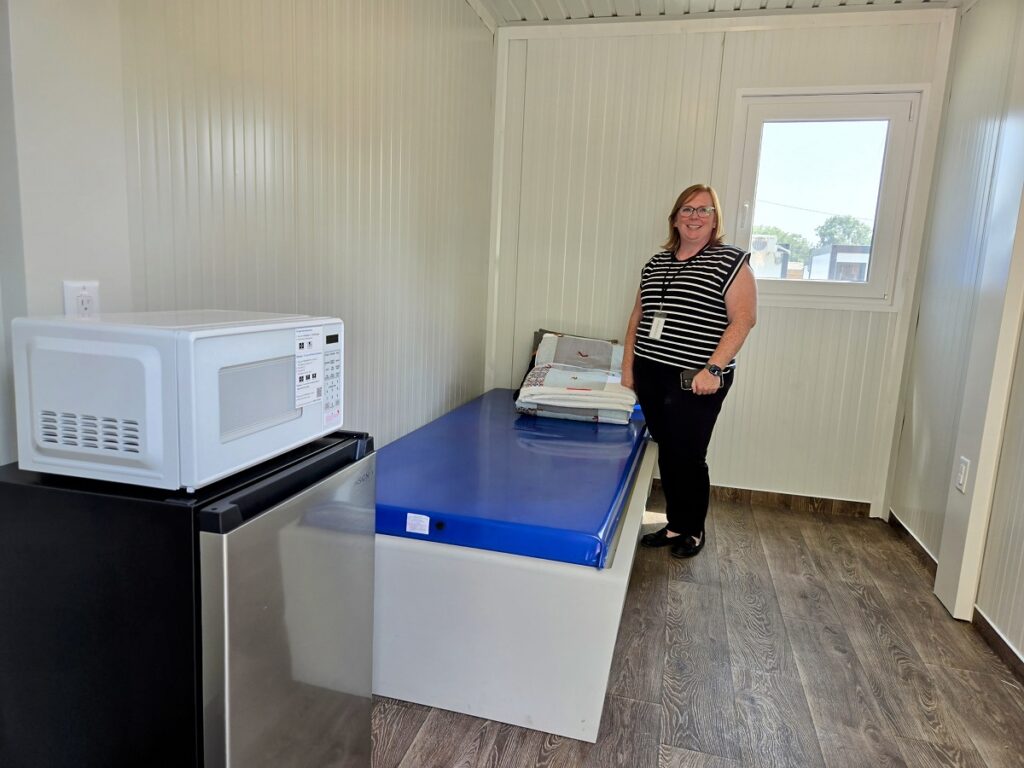
For transitional housing, the current need is identified at 73 units, with that number expected to nearly double by 2030. Staff recommend expanding the Pathways on Park program with an additional 50 cabins.
Supportive housing shows the greatest need, with 139 units currently required and 193 projected by 2030. The report recommends building or renovating properties, with estimated costs reaching up to $49 million.
The need for permanent housing is also identified as a priority, as emergency, transitional, and supportive housing are intended as temporary solutions. At the end of 2025, the waitlist for rent-geared-to-income housing included 1,406 households. The report estimates a need for 1,200 units, increasing to 1,564 by 2030. Affordable housing demand is currently at 800 units, projected to rise to 1,043.
Roughly $58.6 million in capital costs would be needed to address current housing needs, with annual operating costs nearing $9 million.
The report is being presented to council as a guide and no financial commitments will be voted on.